Notes on the Political Economy of the Washington, DC, Maryland, and Virginia (DMV) Region, Part One
We believe that by studying the class composition of the DMV, we can reveal both the unique features of the region and those that speak to broader dynamics in the capitalist economy for our geographically diverse readership.

The following is part one of an introduction to a future series of worker inquiries into educational workplaces in the DC, MD, and VA region. These notes are unfinished in many ways, marking a starting rather than a finishing point. Part one takes a bird's eye view of the region, then zooms in slightly on its transportation networks. Part two will be a brief overview of the history of the region, with a focus on political economy and popular movements. Part three is an analysis of the major industries and workplaces of the DMV—and the experiences of the workers who run them. Part five will conclude the series with a specific survey of the education industry there.
The brain of the federal government is located in the Washington, DC region, a city with a population of just over 700,000. On the surface, the city seems small and unimportant compared to the economic powerhouses populated by millions like New York City, Los Angeles, or Chicago—making it easy to forget about the city outside the monuments and federal government buildings. But that overlooks the full story. Anchored by the federal government, its clients, and workforce, the region that includes and surrounds the District, known locally as the DMV, is an economic powerhouse in its own right. This region encompasses small stretches of Maryland and Virginia beyond the borders of the federal district, including cities of tens or hundreds of thousands like Arlington, Virginia and Germantown, Maryland.
Our aim is to situate our work as organizers within the nation’s capital region. We believe that by studying the class composition of the DMV, we can reveal both the unique features of the region and those that speak to broader dynamics in the capitalist economy for our geographically diverse readership. Throughout this study, we’ll zoom in on the education industry in particular, setting the stage for a series of education workers’ self-inquiries over the next year.
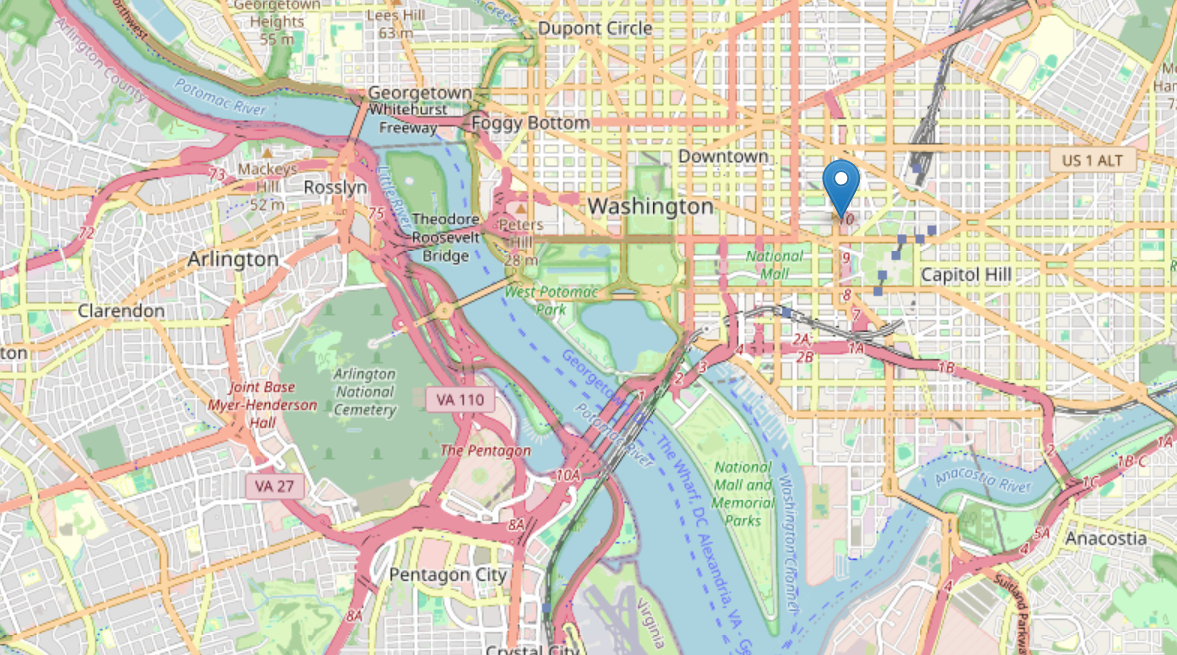
Most locals agree that the DMV is bounded by a network of intersecting highways called the Beltway—which is formed by the intersection of seven Interstate Highways: I-95, I-695, I-595 I-495, I-395, I-270, I-295, I-270, I-66, and US 50. Though most would also include anywhere reached by the region’s Metro rail system. In addition to these interstates, there are several other state highways feeding into the Beltway, including: MD 295, SR 267, US 1, DC 295, MD 5, MD 185, VA 124, VA 267, and many more. This little region exerts a tremendous economic gravity on the surrounding counties. Everyday, its population rises to over a million when you count the hundreds of thousands of workers who commute into the city for work. And when you factor in the highly urbanized region surrounding DC and largely dependent on it, its population rises to over six million, the seventh-most populous metropolitan area in the United States.
The capital city of the United States and its surrounding metropolitan area is often overlooked as a center of social production and reproduction, as well as a site of escalating collective working class struggle. It’s a contradictory region that is simultaneously the center of the Military-Industrial Complex and a historical hub for a variety of liberation struggles; and that’s just to name one example. A unique cultural landscape has formed within a mess of several local, state, and federal jurisdictions. Beneath the political intrigue, millions of ordinary working people keep the nation’s fifth largest metropolitan economy humming along.
There are also economic, social, and political dynamics to analyze that reveal broader similarities with other urbanized regions around the world. Educational institutions around the entire world have been substantially shaped by those based in and around Washington, D.C. We hope to make these connections clear by publishing inquiries written by workers employed in the region's education industry. In addition, we hope to inspire more education workers to undertake inquiries in other locations nationally and globally.
Struggling to Work
All of us commute to work, regardless of where we live or what we do. In the Greater DMV, nearly all of the best-paying jobs in any industry are in Washington, D.C., or at least inside the Beltway. Even the minimum wage is the highest, not just in the DMV, but the entire nation. But that also makes it competitive to land a job in the District. It seems like the whole world is competing with you for every job you apply to—and to an extent, it is. Washington’s status as the seat of the federal government attracts a consistent influx of transplants looking for jobs in politics and communications. Many of the world’s biggest power players send their children to school here, especially foreign diplomats and domestic politicians. A friend of ours used to intermittently serve Malia Obama and her friends while working at an upscale restaurant in Northwest DC. Having a bachelor’s or even master’s degree isn’t special, you need more to stand out. These factors combine to set continually rising standards for the skills and qualifications that employers expect of their employees. So, once you land that job—whether it’s bartending, teaching, or building—you can expect to work your ass off for that comparatively good pay.
An extremely expensive cost of living pushes countless workers, including many native Black Washingtonians, out of the city and into the surrounding counties. That contributes to brutal commutes for many hundreds of thousands of workers, who spend precious hours stuck in stressful traffic or inadequate public transit for the privilege of making a bit more than they would in their own town or city. We have dozens of current and former coworkers who commute ninety minutes, two hours, and sometimes even more each way. More common, but still punishing, are our coworkers who commute forty-five to ninety minutes. Let’s retrace some examples of commutes we and the folks we’ve worked with endure daily.
Take our fellow workers from Bowie, Maryland. They usually take US 50 to where it combines with the Baltimore-Washington Parkway. From there, they’ll either follow the Parkway into the city or split off onto DC 295 to follow various routes to workplaces around the city. Baltimore-Washington Parkway and US 50 fade into New York Avenue, which effectively functions as a highway through the heart of the city—eventually linking into the highways funneling commuters from Northern Virginia and Southern Maryland in and out of the nation’s capital. DC 295, meanwhile, slices through the section of the city east of the Anacostia River, usually referred to as “East of the River” both in local speech and official city government designations. Following DC 295, which traces the course of the Anacostia, takes you past dense neighborhoods crammed against Joint Base Anacostia-Bolling, the DC Water treatment plant, the city’s metro rail lines, and the highway itself.
Back across the river, but still deep in the Northeast and Southeast quadrants of the District, the train tracks serving passenger, commuter, and freight rail traffic mesh with the networks of highways to carve neighborhoods and workplaces apart. These transit systems facilitate economic, social, and political connections between the city and the broader region while they simultaneously divide localities within the city from one another. The Washington Metropolitan Area Transit Authority does a great deal to smooth these divisions with one of the best public transportation systems in the United States—though the bar is low here. Even then, the subway and bus routes are primarily configured to serve commuter traffic in and out of the city, or between the outer edges of the city and downtown.
For our fellow workers living in Frederick, Maryland, working in the District entails either a long drive down I-270 or a long ride on a Maryland Area Rail Commuter (MARC) train to Union Station, and followed by a subway or Metrobus ride.
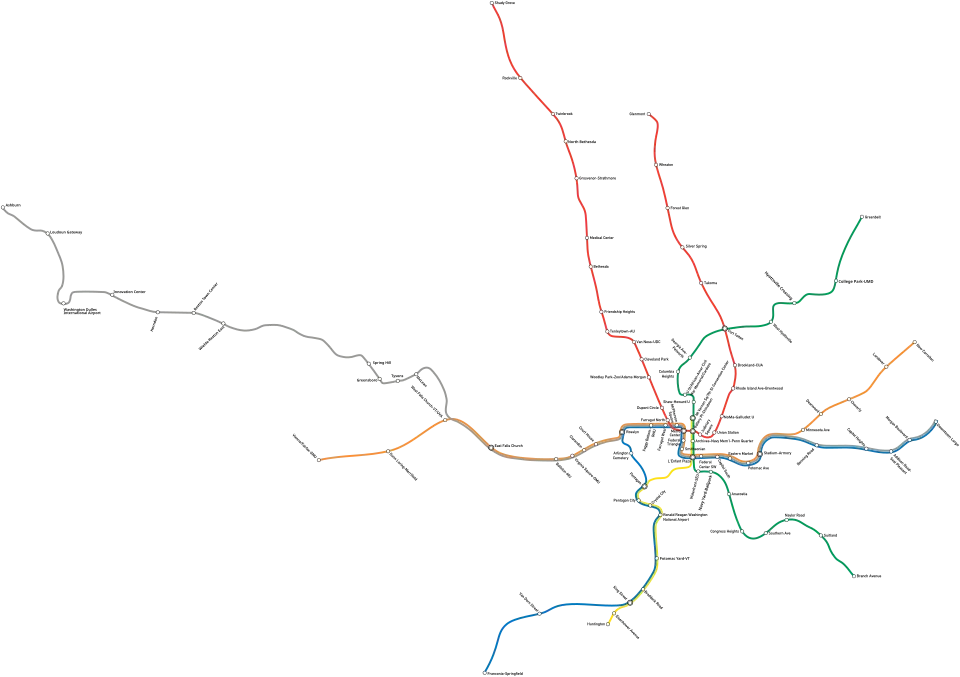
All these transportation systems converging on the city connect it to Dulles International Airport and Washington National Airport. These two airports flood the region with people and goods from around the globe. Virginia Highway 267 and the Silver Line of WMATA’s Metro system connect Dulles International Airport to Washington, DC. Along with the Orange and Blue Lines of the Metro, roads and rails integrate Fairfax and Loudon Counties into a massive urbanized corridor sprawling across most of Northern Virginia from Leesburg all the way to Woodbridge. At least two dozen Fortune 500 companies are headquartered in this area, with a disproportionate number concentrated in the Military-Industrial Complex such as Boeing, Lockheed Martin, Northrop Grumman, and Raytheon (now RTX Corporation). Others are banking and finance firms like Capital One, Fannie Mae, and Freddie Mac. Construction, hospitality, and telecommunication companies are also common on the list. And of course, there are a massive number of data centers—particularly AI data centers—with many more under construction.
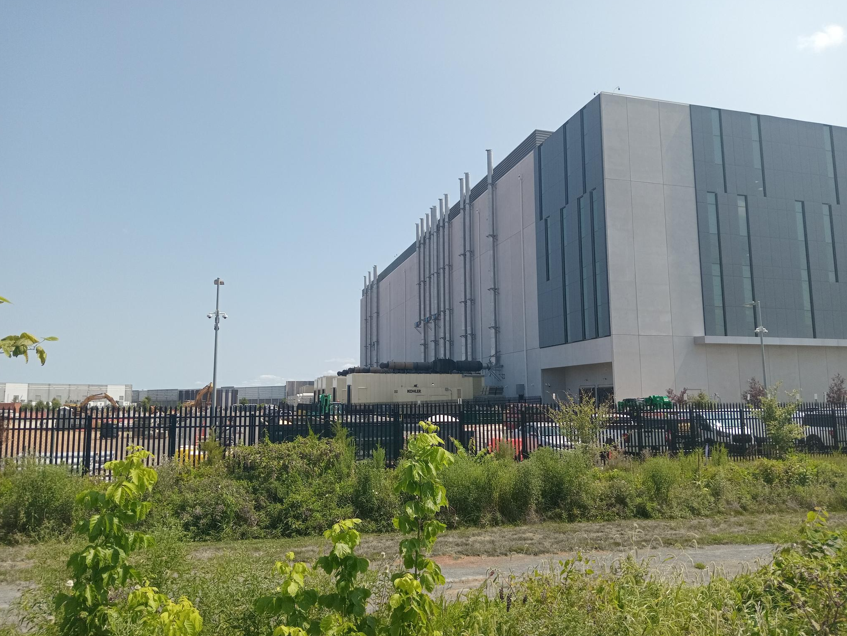
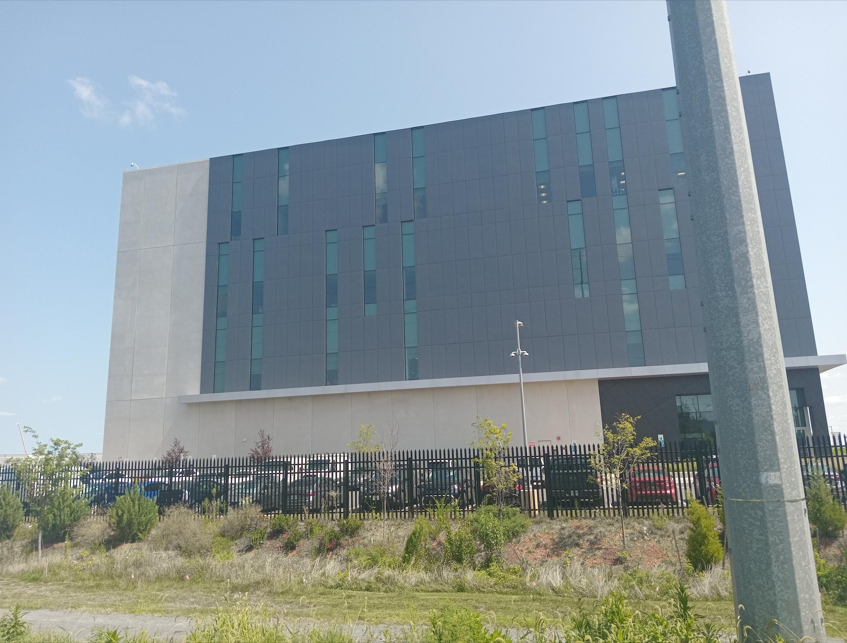
One of many data centers visible along the W and OD Trail in Northern Virginia. The trail itself is interesting—a strip of nature winding through ecosystems recently annihilated by 30 years of relentless urbanization. Photos by author.
Coworkers from Northern Virginia, or NoVa, commute along these jammed highways all the way into the city or into other parts of NoVa. The Orange, Blue, and Silver lines of the Metro—along with an assortment of bus lines—also serve the region. By mid-morning, the parking lots at most of these Metro stations are nearly full of the cars of commuters desperate to avoid traffic on I-66 and I-395, which converge with the George Washington Memorial Parkway and US 1 right by the Pentagon. Gorging on cars fed into it from I-495 via the GWMP, I-395 swallows all this traffic into the city across a few bridges. Rush hour features inescapable bumper-to-bumper traffic no matter how you approach the city by road, but this monstrous amalgamation of roads in NoVa is its ultimate form. Even if you avoid entering the city on I-395, your other options aren’t much better. Key Bridge, Chain Bridge, and Roosevelt Bridge, all accessed by the GWMP, are even more congested. If you live in NoVa but work in Montgomery or Prince George’s Counties, you have to endure the Beltway, snarled in traffic arcing back and forth across DC’s northern thrust into Maryland.
Underneath it all, three Metro lines meet, funneling tens of thousands of people from Virginia into Downtown DC and beyond. A total of six Metro lines snake between their geographically disparate end points. Altogether, WMATA oversees the “third largest heavy rail transit system and sixth largest bus network” in the entire United States. If you’re out in the Maryland or Virginia portions of the DMV, getting between Metro lines often requires riding all the way into the city and transferring lines. In the case of the Red Line, this gets especially absurd. The two end points—fixed within ten miles of one another near the Beltway—contort the line into a U shape swerving through Washington, DC’s Downtown. It can easily take over an hour to traverse the two separate bus routes you have transfer between to bridge this gap. Where busses or other transit options between the end points of Metro lines, all except one take greater than forty-five minutes of precious time, each way. One day, hopefully, a completed Purple Line of the Metro will stitch the patchwork of transit options available in this part of the DMV together.
While commuting by public transit is far cheaper than by car, train and bus fare add up, and the cost of both are always rising. Nearly a million people use the Metro every weekday, but not all of them pay up. A lot of people jump the turnstile for the train or skip fare on the busses, causing the authorities to attempt crackdowns that rarely seem to reduce fare skipping, but does succeed at terrorizing the city’s poor. In some parts of the region, paying for public transit—especially the busses—has been effectively abolished, a (usually) quiet yet significant manifestation of class struggle from below. From above, rich communities in Montgomery County have hampered the construction of the Purple Lines for decades. Emblematic are towns like Chevy Chase and Bethesda, which basically incorporate the neighborhoods along the District’s northwestern border.
Within the District, hundreds of thousands of workers scramble around the city to get to and from work each day. Since the Metro rail was built primarily to transport workers commuting from the suburbs, there are several places in the city that you can’t reach on the subway. For hospitality and retail workers commuting to work in the upscale Georgetown neighborhood, there is no Metro station at all. They must either drive or take long bus rides on multiple Metro lines, busses, or both. Many of these workers are native Black Washingtonians from East of the River or Central American immigrants from neighborhoods like Columbia Heights—or commute from just outside the city but within the Beltway. Georgetown lacks a Metro station largely because the mostly white upper class residents don’t want the rabble coming to their neighborhood. It is ironic, then, that this “rabble” comes to Georgetown everyday, just in costlier and less convenient ways; all to service the local luxury consumerist economy.
Workers who live just outside the city—especially low wage workers unable to afford cars—usually have to undertake daily odysseys on the busses. This often entails switching between two or more bus lines to reach workplaces in places beyond the normal reach of public transit, including the affluent communities scattered throughout the DMV’s western half. Prominent examples include: Deep Northwest, DC; Bethesda, MD; Potomac, MD; Chevy Chase, MD; Fairfax, VA; Alexandria, VA; and the set of mega-shopping complexes known as Tysons, VA. They work in grocery stores, restaurants, luxury retail outfits, university dining halls, K-12 school district warehouses, apartment buildings, hospitals, daycares, and offices. They do the “unskilled” yet vital work that keeps some of the nation’s most glamorous, prestigious businesses and institutions running on a day to day basis.
And at the end of your day, whenever that is, you make the long or short journey back home. Somehow, it always takes longer than it should. Even those of us who live in the city itself often spend at least 30 minutes during each leg of our journeys to and from work. After a long day of being exploited at work, it’s another stressful hurdle to overcome before you’re allowed to go and live your life with your loved ones. Most of them are also stressed and exhausted from work.
Look forward to part two soon!