A Basic Guide to Unionization for Charter School Workers
An overview of collective bargaining, union elections, and case studies in how labor law applies to charter schools

Introduction: A New Class Composition
Charter schools been surrounded by controversy since before their legal birth in 1992—and for good reason: they are the spearhead of an all out offensive against public education not just in the United States, but across the world.
 Ryan Ward
Their earliest genesis is in the “massive resistance” to school desegregation of the 1950s. Some charter school companies charge their customers for transporting their children to school. Others buy up public land for steeply discounted rates. Or take advantage of Hurricane Katrina to privatize the entire school system of New Orleans by replacing public schools with a patchwork network of charter schools. They are also often pushed in tandem with consistently unpopular school voucher programs, skirting or flaunting democratic processes to do so.
For a long time, then, organized public school workers have seen charter school workers as anti-union dupes. And during the first fifteen to twenty years of charter school history, this was probably true, especially of the teachers. Old school pro-IWW workers would have referred to these teachers as Mr. Blocks. But there is much evidence to suggest that this has changed.
The generation of non-unionized teachers “willing to work long hours for school leaders who could dismiss them at-will” are gone or thoroughly disillusioned. They are no longer “20-somethings”. Coming up after them is a generation that is increasingly radicalizing. Many, perhaps even most, young charter school teachers only took jobs in charters because they failed to get hired in any nearby public school district. This is especially true for humanities teachers, for whom job openings in most public school districts have become increasingly rare since No Child Left Behind.
Economic restructuring has spread agitated workers throughout the entire charter subsector of the industry. Laid off tech workers are just one new strata. Militant, trained workers attempting to unionize one set of charter schools are now employed in other, similar charter school settings, especially in cities and states with dense concentrations of charter schools. A new class composition has emerged. It consists of workers who see the nostrums for fixing education for what they are: another prong of the class war waged by the rich against the common people.
Charter school workers seem more interested in unionization than ever. Staff in charter schools consistently earn lower salaries than their counterparts in traditional public schools. They have fewer benefits—and those are always of lower quality than those in the public school system. Education is already known for low salaries and wages. So those of us in charter schools are suffering even more greatly, by default. And despite rhetoric from administrators and CEOs about “Highly Qualified Teachers,” charter school teachers are less likely to be fully accredited to be classroom teachers. We care for our students. Deeply. But our bosses and managers are failing them.
 Angry Education Workers
There has been an upsurge of organizing at charter schools since 2018. Roughly 25 percent of charter school workers in Chicago and Los Angeles are unionized as of 2020. Nationwide, about eleven percent of charter schools are unionized as of 2024. The presence of militant locals of mainstream teacher unions committed to bargaining for the common good explains part of that comparative strength in certain cities. But without workers who are ready and willing to take direct action already employed at charter schools, that organizing would have been impossible. Similar potential must remain stifled in many cities and towns across the United States. If the mainstream teachers unions (outside of some locals) won’t fight to unleash that potential, more revolutionary unions like the Industrial Workers of the World will. It is time to organize the unorganized!
 Angry Education Workers
Only workers can impose the solution
Fortunately, there’s a way to force your bosses to sit across from you and your coworkers and negotiate something better for everyone. Ultimately, that’s the power you and your coworkers can demonstrate through solidarity and organization—but in an era where unions are weak and low in membership, a union election supervised by the National Labor Relations Board (NLRB) is a valid way to exert your power. Bosses rely on us not even reaching out for support or using the resources available to us. We should flip the script whenever we can.
The future of the NLRB itself is uncertain, but for now the agency is functioning (even if not well). Even when the NLRB did not have the necessary quorum to issue decisions, its regional offices were still able to hear cases and make rulings. And as of December 2025, the NLRB regained its quorum with the Senate confirming a new General Counsel—Crystal Carey—and two new board members. They were appointed by Trump, so it's no surprise that Carey and new board member Scott Mayer are partners of union busting law firm Morgan Lewis. We recommend using journalist Matt Bruenig's NLRB Edge publication to keep up to date with news related to the NLRB.
 Matt Bruenig
 Matt Bruenig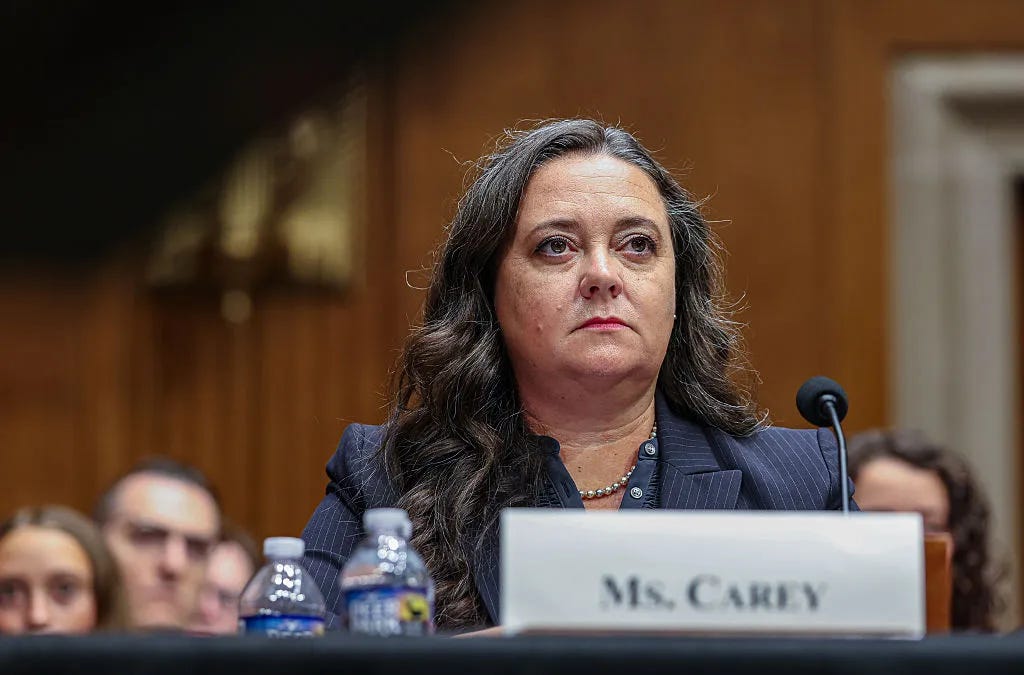
While it’s possible to ask for, and gain, voluntary recognition of your union by your employer—it is unlikely. You and your coworkers must prepare for a showdown with your bosses.

That said, the NLRB is not meant to build worker power. It is meant to keep you working and your boss profiting. Take, for example, this clause from Section 1 of the National Labor Relations Act of 1935:
Experience has further demonstrated that certain practices by some labor organizations, their officers, and members have the intent or the necessary effect of burdening or obstructing commerce by preventing the free flow of goods in such commerce through strikes and other forms of industrial unrest or through concerted activities which impair the interest of the public in the free flow of such commerce. The elimination of such practices is a necessary condition to the assurance of the rights herein guaranteed.
Not only that, but the agency is also severely underfunded and is struggling to enforce even the most basic of labor laws. Take the retaliation Starbucks Workers United (SBWU) is facing in the form of mass store closures and firings. Charter school workers at Cesar Chavez Public Charter School in Washington DC experienced this sort of retaliation even earlier—in 2019. The NLRB failed to protect them, and countless other workers, too.
 Matt Bruenig
More evidence that an injury to one is an injury to all, and that we can't rely on government bodies as a substitute for direct worker power. Even so, formal union certification can be useful from a tactical point of view. If it tips the balance of power in our favor, we should welcome it.
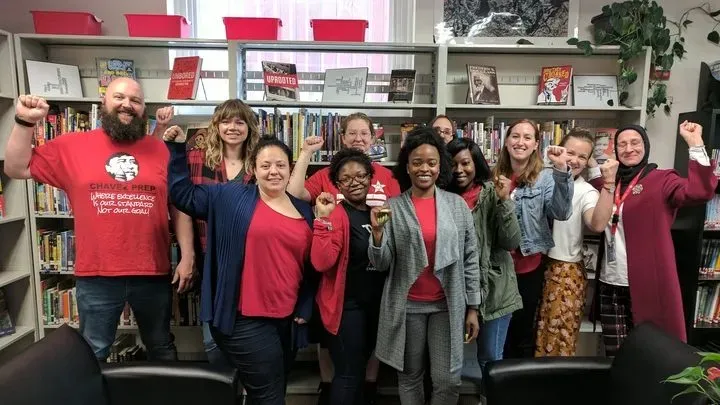
Even so, only tightly woven relationships of solidarity between education workers in charter schools—outside of any government body or non-profit—can build the class power we need to change the balance of power in our workplaces. Godfrey Moase, a revolutionary unionist from Australia, articulates this clearly in his meditation on the concept of "solidarity bargaining", which we strongly recommend you read.
As such, it is not a short cut for the hard work of organising a union. It is not a way around the struggle. It is neither a replacement for the necessity of organising deep and thick bonds between workers in the workplace nor a way of avoiding an analysis of, and proactive organising campaigns in, sites of strategic worker leverage within the economy as it is presently constituted, from logistics nodes to sites of necessary social reproduction.
But we can also use existing regimes of collective bargaining as tools. Combined with militant direct action, we can transform collective bargaining into solidarity bargaining:
Rather, solidarity bargaining is a means through which such struggles can be connected with each other and the broader working class in relations of solidarity. Solidarity is the way union workers stand up for the working class as a whole, and in doing so more and more of the working class stands up.
 Godfrey Moase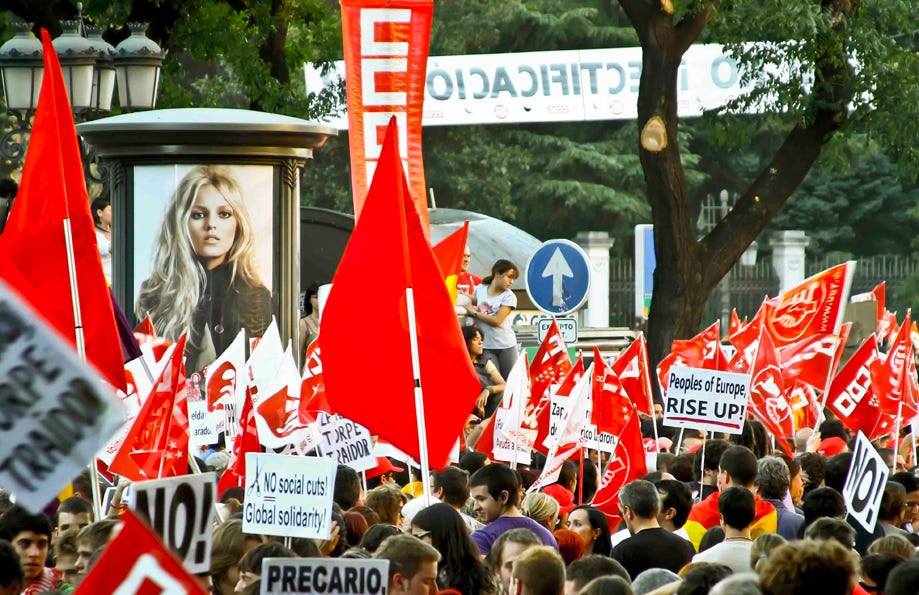
Moase reminds us that collective bargaining, as practiced by the moderate unions, “leaves capital in control of the workplace and the broader economy. This control undermines the foundations of worker power, and because worker-to-worker power waxes and wanes, it leaves organised labour forever open to capital’s reaction to force a new, meaner social settlement”. Our horizon as a movement must always be the abolition of capitalism and its replacement with socialism.
 Godfrey Moase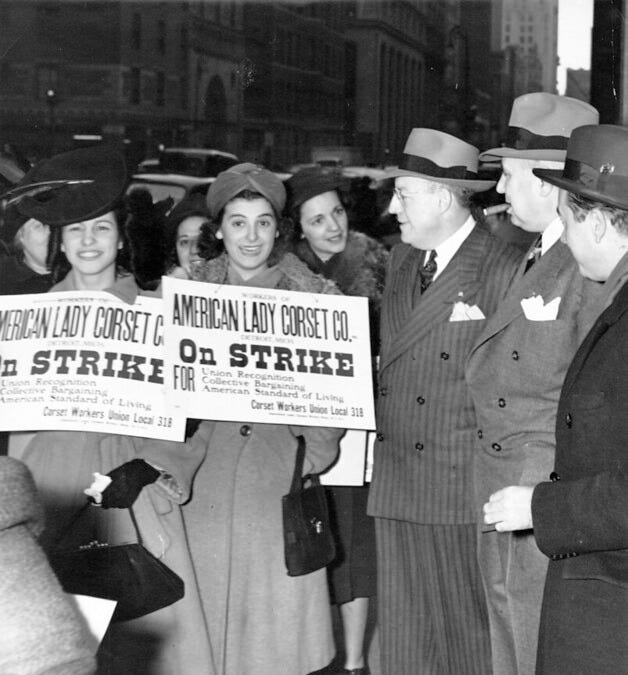
Simultaneously, workers should take advantage of legal and political structures their ancestors fought and died to put into place to advance our cause—however flawed they are. Especially as we rebuild an industrially organized, militant labor movement that can cross borders and other dividing lines within the class. Networks of worker-militants within charter schools, for example, could link up with established unions in traditional public schools, including autonomous worker initiatives in and against the union, to take collective action across workplaces and job roles.
 Vik Chechi-Ribeiro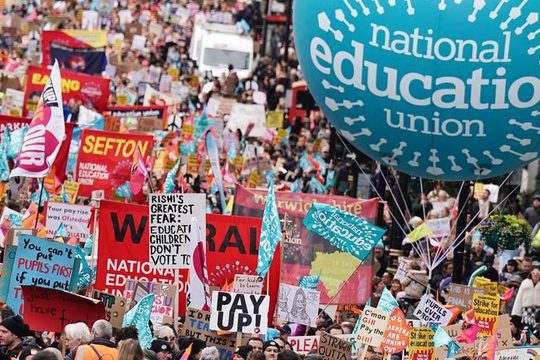
As we build class power and go from traditional collective bargaining to solidarity bargaining, those of us in charter schools could have a major role to play in reversing decades of privatization in the education industry, as well as in other industries. We can help plant the seeds of a future socialist education system. Moase outlines what this might look like in practice:
By laying the groundwork for broader and deeper strikes, ideally drawing in new groups of workers organising, it builds the potential for a class-wide impact. That’s solidarity bargaining. In short, it’s a strategy that uses collective bargaining rounds at previously disconnected workplaces to prepare for struggles that can draw in broader and broader sections of the working class.
Charter school workers, united with education workers across all dividing lines, have a powerful role to play in the broader class struggle. Affiliation with an industrial union for education workers would be the most effective expression of our power. To engage in solidarity bargaining, charter school workers must go beyond the shop-by-shop approach they have largely taken so far.
 Angry Education Workers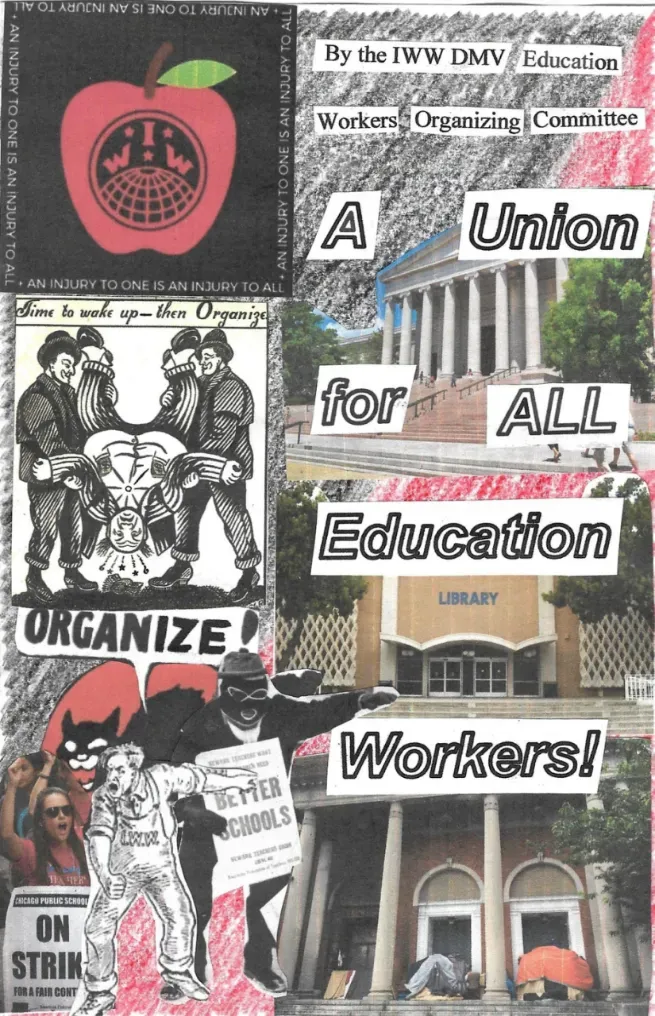
As we discussed in "Towards a Revolutionary Union Movement", such a formation would allow us to overcome the limits of traditional collective bargaining by
incorporating common moderate union practices like contracts in small doses, while never compromising on our revolutionary vision for the future. This approach would inoculate us against abandoning our revolutionary principles. By engaging with these practices we must simultaneously act to transform them. Union contracts normally can only cover wages, benefits, and hours. Organized worker power can change this. Teacher unions in particular, but now also the Writers’ Guild of America (WGA), are setting precedent for things like housing, AI, funding levels, and more to be struggled over even in formal negotiations. The cooperation of the Civil Rights Movement and the labor movement in the 20th Century taught us that the law is not set in stone, and that we can change legal precedent through our organized struggles.
 Angry Education Workers
The Steps of an NLRB Election
The first step in an NLRB election is to make sure you have, at the very least, 30 percent of your coworkers on board with unionizing. Realistically, you want a lot more than that. Most mainstream unions recommend at least 70 percent. The IWW recommends 80-90 percent support before filing for an election. Teachers at Citizens of the World charter schools in Los Angeles waited until they had over 85% support before filing their official petition to affiliate with United Teachers of Los Angeles (UTLA).
In the wake of the Cemex Decision from the NLRB in 2023, it is also the most pragmatic route. If a majority, let alone 80 percent, signal support for a union, then you can ask the company for voluntary recognition. It also acts as a temporary shield if someone snitches to the boss or the word about union organizing otherwise gets out. For the company to contest this, they have two weeks to file for a union election with the NLRB. More, if they engage in union busting during the election, the agency will cancel the election and issue an immediate order to bargain in good-faith with the union. While the current NLRB, dominated by the Republican Party, has announced its intention to do away with the Cemex framework, it has not been able to do so yet. Throughout the last year, the NLRB has continued to issue orders to bargain in good faith under the Cemex framework.
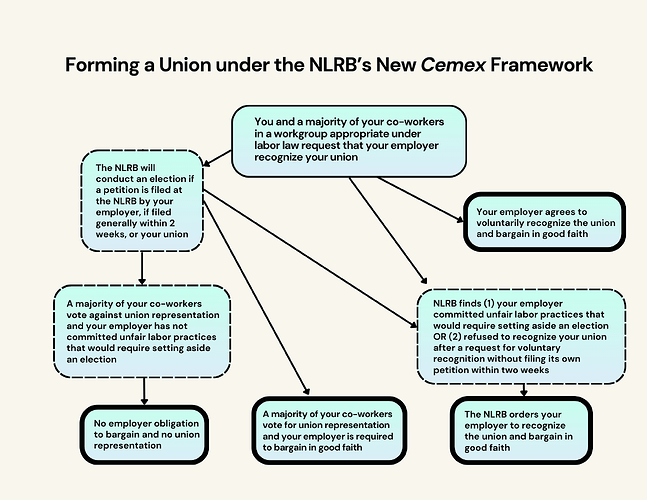
Power precedes the election; it does not come from it. The NLRB is subject to electoral political jockeying between Republicans and Democrats, so no protection they provide can ever be taken for granted. As it has always been, solidarity with our fellow workers is our best weapon. Once you feel you have enough support, you’ll need to gather a few forms from the NLRB website:
First, read the Procedure in Certification Elections. It details the different forms involved in the process of an NLRB election that you may or may not have to file/deal with. Mainly, this will be the Representation Certification (RC) form you and your coworkers need to file. It is simple and easy to fill out at just about one page long. The Position Statement Form is for your employer to fill out once you serve the petition on them.
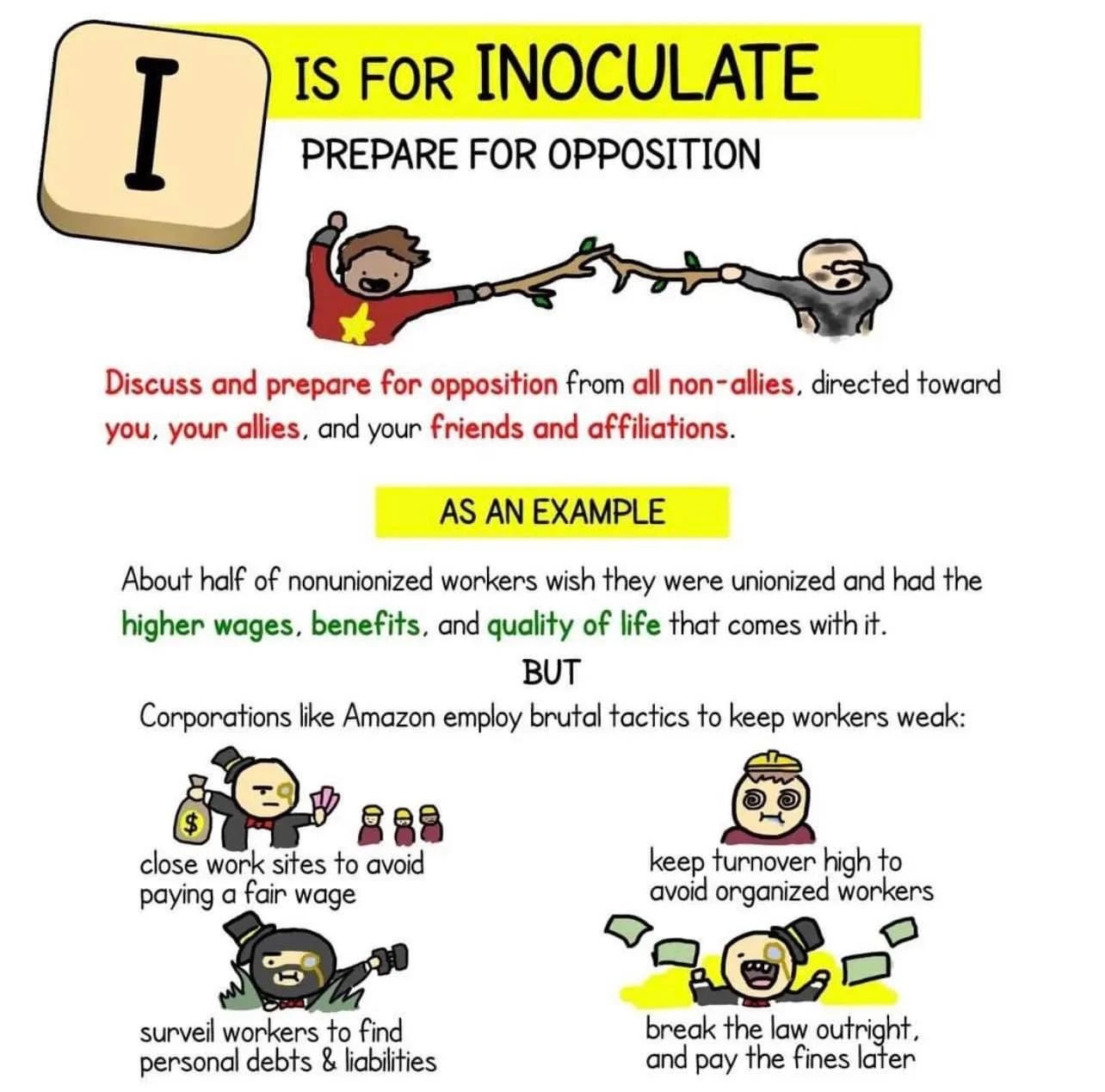
This is a great opportunity for powerful direct action. Charter school workers could use a march on the boss—where you and your coworkers confront the employer with a specific demand—to deliver a petition for voluntary recognition. If the organization that operates the charter school refuses, they’ll have an opportunity to fill out all the paperwork, right then and there. Of course, inoculation will be key. Your boss will go all out to smash the union. Or at least that’s the most likely scenario, unfortunately. Be ready to fight back with direct action, because if your employer challenges the results of the election or retaliates in any way, it might take months or even over a year to receive final decisions from the board. Especially in a time when the NLRB is exceptionally understaffed and underfunded, companies love to hit workers with as many firings, captive audience meetings, and instances of intimidation as possible for as long as possible to erode support for the union effort.
This is the time to pump the energy up. Demonstrate to your coworkers that you, the workers, are the union. Winning the election was useful, but you must continue to flex your power to build it. Show your bosses that your union already exists and is not to be trifled with.
This is where your boss can challenge the “bargaining unit.” A bargaining unit is the eligible employees included in the negotiated collective bargaining agreement (CBA). A staff union for charter school workers (that we’ll discuss in more detail a little later) dealt with this firsthand when their employer, a charter management organization (CMO), declared that all employees at all campuses must be included. Demonstrating the necessity of concrete worker-to-worker organizing to enforce PERB-facilitated bargaining, the charter worker-organizers went out and persuaded a supermajority of workers at the other campus to support the union. Even after the election, their employer continued union-busting, and for two more weeks refused to recognize the union. It took repeated direct action by rank-and-file workers to win recognition in July 2022.
We understand many workers will have anxieties going into this process. Charter schools are viciously anti-union—in fact, they were created specifically to destroy teachers’ unions (and privatize public education). Governmental and legal bodies are intimidating to deal with. Or straight up dangerous in some cases. The state isn’t exactly known for being friendly to worker self-organization, to say the least. But getting formal recognition doesn’t mean you give up control of your workplace organizing campaign, especially if you elect to organize with unions like the IWW or UE. You are still in control of what you do next.
But when your boss refuses to budge, a formal election can force your boss to the table. In this case, you’ve taken more control over your workplace organizing campaign. Your boss can no longer skirt negotiating in the same ways. File an Unfair Labor Practice (ULP) suit for every single instance of union busting that you and your coworkers can document. An Administrative Law Judge from the NLRB's storied Division of Judges will then hear your case. Your boss can be held legally liable through fines, mandated re-hirings, and public announcements of their wrongdoing for bargaining in bad faith or retaliating after a union election win. The current NLRB is also applying an expansive definition of “full remedies” that has anti-union lawyers spooked. These are still pretty weak measures (and just like with Cemex, Trump's NLRB is looking for a chance to toss out this guidance), but paired with strong organization and direct action, it increases your leverage. Let’s hit our bosses on all fronts.
NLRB or PERB?
Sometimes, charter school workers will have to deal with an entirely different body than the National Labor Relations Board. Each of the 50 states and the District of Columbia have a Public Employee Review Board (PERB). Most public-sector unions, including those of public school teachers, are governed under these state-level bodies. More research is needed to understand the legal terrain in the US dependent territories *cough* colonies *cough* (Guam and Puerto Rico) that have charter school authorization laws on the books.
Whether you deal with one or the other is a product of class struggle (both on the part of workers and bosses) as expressed on the political level. Generally, the employers want to use the law to consign our unions to supervision by PERBs governed by legislation with far more constraints on the right to strike compared to the NLRA. Which is why most teachers’ strikes are illegal. While the Obama administration’s NLRB ruled that charter schools—as a class of employers—were covered under NLRB jurisdiction, Trump’s NLRB curtailed this precedent in 2020. But it did leave the ability of the agency to supervise union organizing efforts at charter schools on a case by case basis intact. Biden’s NLRB asserted jurisdiction over all formal unionization attempts at charter schools in Arizona, California, Connecticut, District of Columbia, Illinois, Louisiana, Maine, Michigan, Minnesota, New York, Ohio, Oregon, Pennsylvania, Rhode Island, and Tennessee. There was only one exception for a school in Texas.
Essentially, if you filed for union certification with the NLRB during the Biden administration, they probably would have overseen an election by secret ballot that was decided by a simple majority one way or the other. The situation appears like it might be changing again under Trump. In its decision on LYCÉE FRANÇAIS DE LA NOUVELLE-ORLÉANS v UNITED TEACHERS OF NEW ORLEANS, LOCAL 527, LFT, AFT, AFL-CIO from April 2025, the Regional Director of the NLRB for Region 15 ruled that the charter school was a "political subdivision" of the state of Louisiana. That meant it was exempted from the jurisdiction of the NLRB, establishing a precedent for pushing more charter schools back under the regulatory authority of PERBs.
 Matt Bruenig
But not always. It depends on your specific case and location, not to mention the constantly varying political climate. No one who assisted with the writing of this article is a lawyer, so we strongly encourage you to inquire into state and local labor law and to consult authorities more knowledgeable than ourselves.
In New York City, two teachers at a KIPP charter school filed a petition with the region’s NLRB office to decertify the United Federation of Teachers as their union. While those two teachers should feel ashamed of themselves, the UFT’s leadership certainly seems to go out of their way to stifle union democracy and grift off the membership. The UFT tried to block the attempt by arguing the state’s PERB had jurisdiction over the case, rather than the NLRB. However, the NLRB refused to accept this argument, and assumed jurisdiction.
 Educators of NYC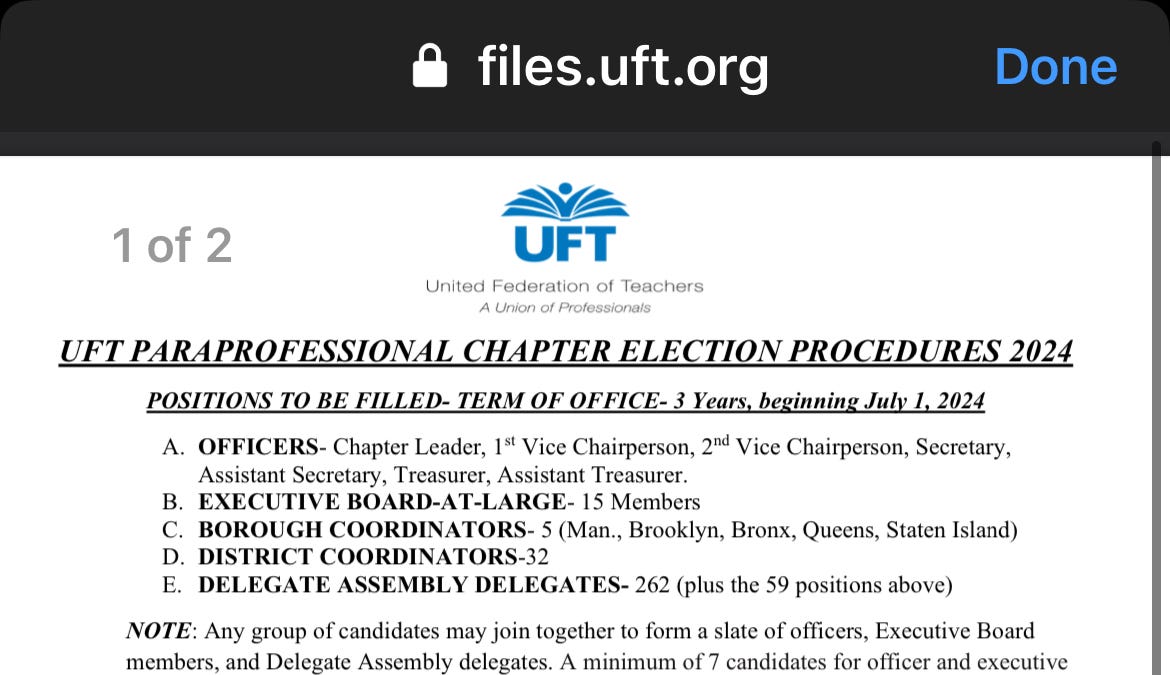
More recently, in June 2025, an ALJ ordered a unionized KIPP Academy in the Bronx to "cease and desist from its unfair labor practices, rescind unilateral changes, invite KIPP Academy teachers to all future regional professional development programs, and bargain in good faith with the Union". Staff at this school were still fighting for their first collective bargaining agreement, four years after they initially organized a union. This highlights just how hard charter schools will fight their own workers' attempts to unionize. But it also reveals that charter school workers in places like New York City can still take advantage of the NLRB.
 Matt Bruenig
Hidden within this legal battle is a hint of the potential for solidarity bargaining to emerge among workers at KIPP's other NYC locations, and the fear that strikes in the heart of the employing class:
The record revealed that KIPP NYC feared the "domino effect" of KIPP Academy reaching a contract, potentially leading other KIPP NYC schools to unionize. This fear appeared to motivate KIPP's bargaining strategy.
KIPP is often referred to as the Walmart of the charter school sector. If we are to organize charter school workers into unions that can combat education privatization through solidarity bargaining, we have to take on battles with these juggernauts of the industry. Clearly, it can be done, so let's get to work.
In some cases, choosing your state’s PERB over the NLRB can be an entirely logical choice. California is one of the minority of states that allow public sector workers to strike. When the Caliber Workers Union filed for a union recognition election, they chose to do so through California’s PERB. That PERB verified that a strong majority of the staff wanted the Industrial Workers of the World (IWW) to represent the formal collective bargaining unit, and ordered that their employer enter into good-faith bargaining with the union. The IWW builds worker self-leadership by leaving negotiations to the shop-floor workers themselves. Of course, the union offers support in the form of external organizing sessions where advice is offered, financial resources, trainings, and participation in direct actions such as phone zaps and picket lines.
Conclusions
A union election win allows you to bargain a formal contract. Companies attempt to circumvent negotiating over anything besides wages, benefits, and grievance procedures at the negotiating table. However, we’re already seeing how teachers’ unions, through bargaining for the common good, are changing that. Even so, at first, you’ll have to fight for “quality of life” issues like how your boss talks to you or the environmental impact of your job through direct action. Even so, a formal contract offers a “foundation” you can use to your advantage. With lower turnover, fairer pay schedules, and better pay, you and your coworkers can go on the offensive on other workplace issues that your contract can’t address as easily. If you want to try and force your boss to donate leftover food to the homeless instead of tossing it out, go for it! Feel like shutting down your warehouse for Earth Day? Hell yes!
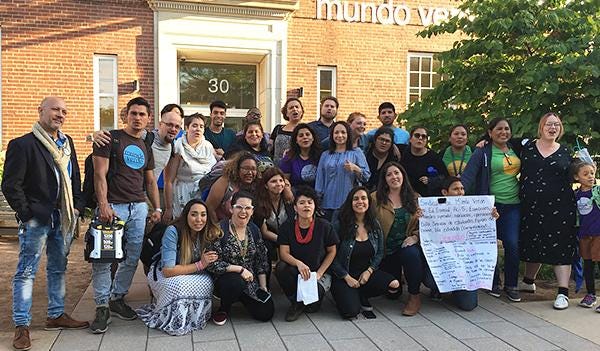
Most of all, we need to make our bargaining units as inclusive as possible (excluding anyone with hiring/firing power). The CWU is a living example of this, since their union “included not only faculty, but office, food service and healthcare workers as well, among others”. In some cases, like that of Mundo Verde Public Charter School in Washington DC, you can create your own union local to act as a nucleus for organizing other charter workers. Through DC ACTS Local 1927 (organized under the AFT), worker-organizers at Mundo Verde have received contacts from people interested in organizing unions at over a dozen other DC charter schools. Two of these schools, Capital City Public Charter School and DC International School have since formally certified their bargaining units. The IWW offers something very similar, but with even more autonomy: job branches. There are also Industrial Union Branches (IUBs). These formations allow you to tailor your bargaining unit to exactly what works best for you while spreading the labor movement.
All in all, the legal front of the labor struggle must be secondary or tertiary. Government agencies like the NLRB or PERBs are flimsy protections in the best of times. And those protections fluctuate wildly over time, especially due to presidential appointments and Congressional actions (or lack of actions). Our struggle is on the shop floor and in the streets. But we must also build our power by any means necessary. If that means we file some forms to the government, then so be it. A contract, just like a law or a declaration of war, is just a mere scrap of paper if labor collectively decides that it is so.
If you're a charter school worker and you're ready to start organizing in your workplace, get in touch! We also recommend starting by signing up for a workplace organizing training such as the IWW's Organizer Training 101, Democratic Socialists of America Emergency Workplace Organizing Committee's (DSA EWOC) Fundamentals of Workplace Organizing (you can find videos of presentations from the training below), or Labor Notes' Secrets of a Successful Organizer.
Further Reading and Research Resources
A playlist of union organizing resources tailored for education workers.
A playlist from the Valley Labor Report about the basics of unions and unionization.
A followup series from TVLR diving deeper into the skills union organizers need after the vote.
TVLR podcast about labor in public schools and education privatization.
A playlist on unionization from DSA EWOC.
Whole group lessons from DSA EWOC's Fundamentals of Workplace Organizing.
Labor Notes podcast.
References
AFT Media Affairs. 2019. “D.C. Charter School Educators Say, ‘Union, Yes!’ | American Federation of Teachers.” AFT News, May 16. https://www.aft.org/news/dc-charter-school-educators-say-union-yes.
AustinLegal. 2012. “Difference Between RC, RM, RD, and UC Petitions | Austin Legal LLC.” AustinLegal, March 15. https://mattaustinlaborlaw.com/difference-between-rc-rm-rd-and-uc-petitions/, https://mattaustinlaborlaw.com/difference-between-rc-rm-rd-and-uc-petitions/.
Barrera, Mario. 2016. “NLRB Asserts Jurisdiction over State Charter Schools | United States | Global Law Firm | Norton Rose Fulbright.” Norton Rose Fullbright, August. https://www.nortonrosefulbright.com/en-us/knowledge/publications/d71c181e/nlrb-asserts-jurisdiction-over-state-charter-schools.
Bruenig, Matt. 2024a. “01/16/2025: New Board Issues First Published Board Decision.” October 31. https://www.nlrbedge.com/p/01162025-new-board-issues-first-published.
Bruenig, Matt. 2024b. 04/02/2025: When Is a Charter School Public Enough to Evade NLRB Jurisdiction? October 31. https://www.nlrbedge.com/p/04022025-when-is-a-charter-school.
Bruenig, Matt. 2024c. 06/10/2025: KIPP Academy Bargained in Bad Faith. October 31. https://www.nlrbedge.com/p/06102025-kipp-academy-bargained-in.
Bruenig, Matt. 2024d. 07/23/2025: ALJ Recommends Cemex Bargaining Order. October 31. https://www.nlrbedge.com/p/07232025-alj-recommends-cemex-bargaining.
Bruenig, Matt. 2024e. 08/07/2025: Wells Fargo Targeted for Cemex Bargaining Order. October 31. https://www.nlrbedge.com/p/08072025-wells-fargo-targeted-for.
Bruenig, Matt. 2024f. Acting General Counsel Rescinds Long List of Biden-Era Guidance. October 31. https://www.nlrbedge.com/p/acting-general-counsel-rescinds-long.
Bruenig, Matt. 2024g. How the NLRB Works Without a Quorum. October 31. https://www.nlrbedge.com/p/how-the-nlrb-works-without-a-quorum.
Bruenig, Matt. 2024h. NLRB Has Regained Its Quorum. October 31. https://www.nlrbedge.com/p/nlrb-has-regained-its-quorum.
Bruenig, Matt. 2024i. The Futility of the NLRB. October 31. https://www.nlrbedge.com/p/the-futility-of-the-nlrb.
Bruenig, Matt. 2024j. Timeline of Notable NLRB Events During Trump’s Second Term. October 31. https://www.nlrbedge.com/p/timeline-of-notable-nlrb-events-during.
Chechi-Ribeiro, Vik and 2023. n.d. “The NEU Strike - Winning a Rank-and-File Led Union.” Notes From Below. Accessed January 18, 2026. https://notesfrombelow.org/article/neu-strike-winning-rank-and-file-led-union.
Cohen, Rachel M. 2015. “When Charters Go Union.” The American Prospect, June 18. https://prospect.org/api/content/37b3fe75-a36d-57dc-9792-9f650f938270/.
Collins, Sam P. K. 2023. “Matching Teachers’ Funds Raises Questions of Public Charter School Unions.” The Washington Informer, February 27. http://www.washingtoninformer.com/matching-teachers-funds-raises-questions-of-public-charter-school-unions/.
Fuller, Kay, and Howard Stevenson. 2019. “Global Education Reform: Understanding the Movement.” Educational Review 71 (1): 1–4. https://doi.org/10.1080/00131911.2019.1532718.
Glass, Aurelia. 2023. “Voluntary Recognition of Unions Is Increasingly Popular Among U.S. Employers.” Center for American Progress (Washington, D.C.), January 18. https://www.americanprogress.org/article/voluntary-recognition-of-unions-is-increasingly-popular-among-u-s-employers/.
Hyde Leadership Charter School – Brooklyn - Decision Summary, Nos. 29–RM–126444; 364 NLRB No. 88 (National Labor Relations Board August 24, 2016). https://casetext.com/analysis/hyde-leadership-charter-school-brooklyn-decision-summary-3. Petitioner was Hyde Leadership Charter School.
IAM Union, dir. 2023. Understanding the NLRB. 5:15. https://www.youtube.com/watch?v=AcLQ2XxRHcc.
LawShelf, dir. 2021. Introduction to Labor Law: Module 1 of 5. 14:43. https://www.youtube.com/watch?v=iEeW64FfjMw.
Lieberman, Mark. 2023. “MAP: Where School Employees Can and Can’t Strike.” Leadership, School & District Management. Education Week, March 16. https://www.edweek.org/leadership/map-where-school-employees-can-and-cant-strike/2023/03.
Linton, Richard. 2004. A History of the NRLB Judges Division With Special Emphasis on the Early Years. National Labor Relations Board. https://www.nlrb.gov/sites/default/files/attachments/pages/node-82/judgesdivisionhistory.pdf
Logan, John. 2021. “12 Facts About Morgan Lewis, Amazon’s Powerful Anti-Union Law Firm.” LAWCHA, February 2. https://lawcha.org/2021/02/02/12-facts-about-morgan-lewis-amazons-powerful-anti-union-law-firm/.
McKenna, Connie. 2020. “Organizing in a Pandemic: A Charter School Goes Union | American Federation of Teachers.” AFT News, June 24. https://www.aft.org/news/organizing-pandemic-charter-school-goes-union.
Moase, Godfrey. 2025a. “Chapter 3: Solidarity Bargaining.” Substack newsletter. The Solidarity Wedge, November 13. https://godfreymoase.substack.com/p/chapter-3-solidarity-bargaining.
Moase, Godfrey. 2025b. “On Collective Bargaining.” Substack newsletter. The Solidarity Wedge, November 21. https://godfreymoase.substack.com/p/on-collective-bargaining.
NLRB, dir. 2020. How the NLRB Works! 24:40. https://www.youtube.com/watch?v=PoTqFolk1Yg.
NLRB. 2025a. “Division of Judges | National Labor Relations Board.” Government. National Labor Relations Board. https://www.nlrb.gov/about-nlrb/who-we-are/division-of-judges.
NLRB. 2025b. “Regional Offices | National Labor Relations Board.” Government. National Labor Relations Board. https://www.nlrb.gov/about-nlrb/who-we-are/regional-offices.
NLRB Office of Public Affairs. 2019. “Board Grants Review and Invites Briefs Regarding Jurisdiction Over Charter Schools | National Labor Relations Board.” News and Publications, February 4. https://www.nlrb.gov/news-outreach/news-story/board-grants-review-and-invites-briefs-regarding-jurisdiction-over-charter.
Rooks, Noliwe. 2017. Cutting School: Privatization, Segregation, and the End of Public School. The New Press.
Roscoe, Jules. 2023. “Companies That Union-Bust Must Now Automatically Recognize Union, NLRB Rules.” Vice, August 25. https://www.vice.com/en/article/dy3xej/companies-that-union-bust-must-now-automatically-recognize-union-nlrb-rules.
Schwartz, David. 2021. “NLRB Jurisdiction Over Charter Schools.” SSRN Scholarly Paper No. 4023534. Rochester, NY, December 31. https://papers.ssrn.com/abstract=4023534.
Smith, Anneke, and Political Reporter. 2024. “Charter Schools Revived as Bill Passes Final Reading.” RNZ, September 25. https://www.rnz.co.nz/news/political/528977/charter-schools-revived-as-bill-passes-final-reading.
Sobol, Daniel, and Brandon Shemtob. 2023. “Cemex Decision Examined: How the NLRB Dramatically Changed the Unionization Process.” Stevens & Lee, September 12. https://www.stevenslee.com/labor-and-employment-law-center/cemex-decision-examined-how-the-nlrb-dramatically-changed-the-unionization-process/.
The Associated Press. 2019. “Teachers Say DC Charter School Is Closing Over Union Efforts.” NBC4 Washington, March 8. https://www.nbcwashington.com/news/local/teachers-say-dc-charter-school-is-closing-over-union-efforts/721/.
Theodore, Mark, and Josh S. Fox. 2019. “What Jurisdiction Does the NLRB Have Over Charter Schools?” Labor Relations Update. The National Law Review, February 7. https://natlawreview.com/article/are-charter-schools-covered-national-labor-relations-act-nlrb-to-reconsider-its.
Theodore, Mark, Josh S. Fox, and Samantha Shear. 2020. “NLRB Will Not Decline Jurisdiction over Charter Schools.” Labor Relations Update. National Law Review, March 27. https://natlawreview.com/article/nlrb-decides-to-assert-jurisdiction-over-charter-schools-case-case-basis.
U.S. Department of Labor. n.d. “Forming a Union at a Non-Union Workplace.” Government. Worker.Gov. Accessed April 13, 2024. https://www.worker.gov/form-a-union/.
Walsh, Thomas. 2023. “Does the Federal Government Have Authority Over Public Charter Schools?” Effective Education. Atlantic Legal Foundation (Atlanta), January 12. https://atlanticlegal.org/news/battle-over-federal-jurisdiction-of-charter-schools/.
Walsh, Thomas, and Robert Kaplan. 2021. “Charter School Developments: The NLRB (Finally) Takes an Honorable Course.” Effective Education. Atlantic Legal Foundation (Atlanta), April 7. https://atlanticlegal.org/news/charter-school-developments-the-nlrb-finally-takes-an-honorable-course/.
Ward, Ryan. 2025a. “A Corporate Agenda by Any Other Name.” Substack newsletter. Free Market Moralism, January 27. https://weareunderused.substack.com/p/a-corporate-agenda-by-any-other-name.
Ward, Ryan. 2025b. “Privatisation Explained.” Substack newsletter. Free Market Moralism, January 15. https://weareunderused.substack.com/p/privatisation-explained.
Wexler, Sara, Nicole Barraza, and Marin Hodges. 2024. “A Charter School Network in Los Angeles Goes Union.” Jacobin Magazine, June 26. https://jacobin.com/2024/06/charter-school-unionize-utla-teachers.